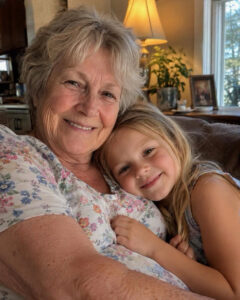
The weekends I thought I was giving up for my daughter-in-law’s peace were the same weekends my granddaughter had quietly been waiting for me
Family relationships are rarely simple.
Megan and I kept our interactions polite rather than warm, but weekends were sacred to me.
Every Saturday morning, unless someone was sick or out of town, I drove twenty-five minutes to my son Daniel’s house with something tucked under my arm.
Sometimes it was cinnamon rolls.
Sometimes a new puzzle.
Usually it was whatever seven-year-old Sophie had decided we absolutely needed for that week’s “important project.”
A birdhouse.
A scrapbook.
A crooked clay bowl she insisted we could turn into a planter.
Daniel used to laugh when he opened the door.
— Mom, you know we own things already, right?
— Clearly not enough things.
Sophie would come running before I had both feet inside.
— Grandma!
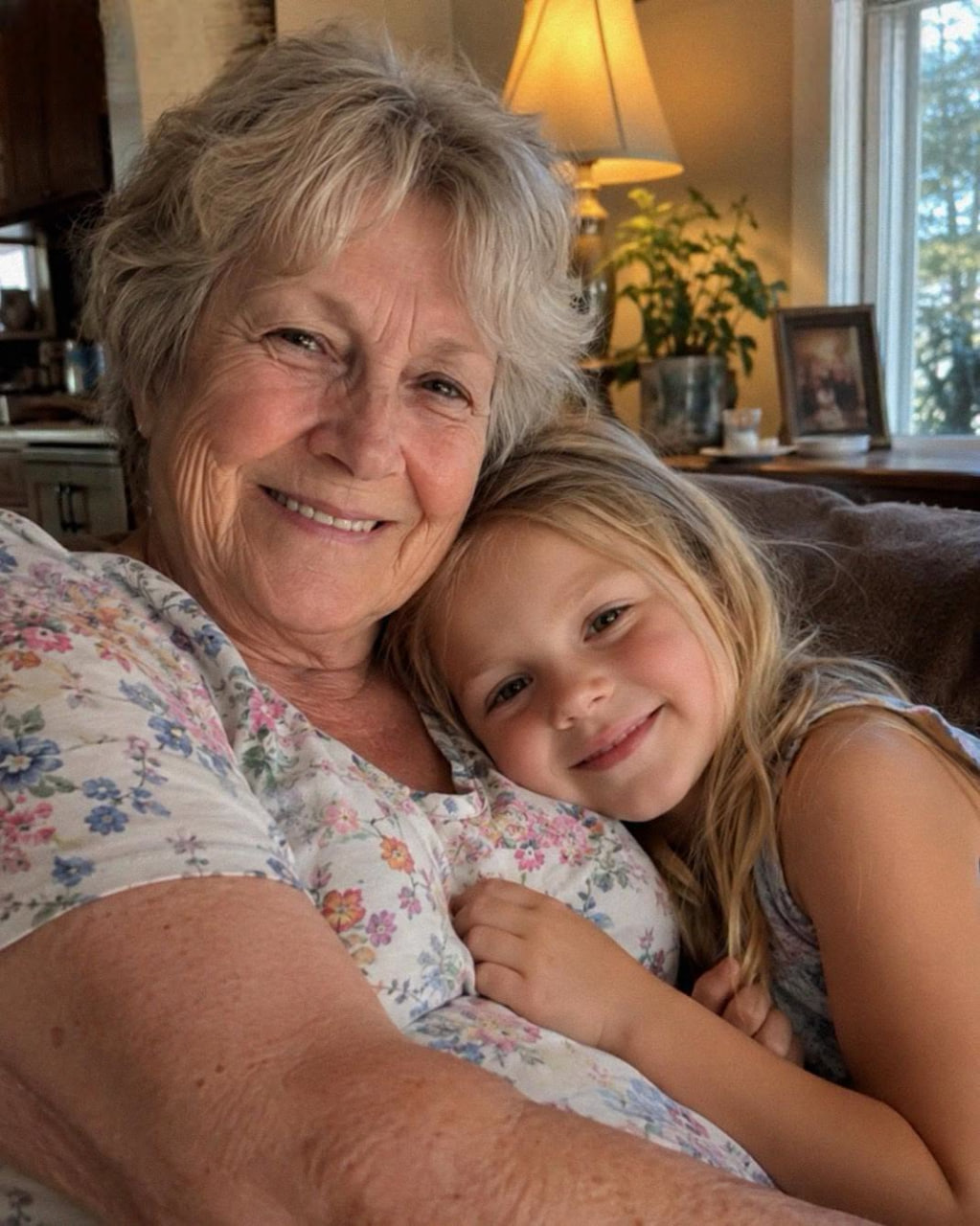
Then she would wrap her arms around my waist like she had not seen me in months instead of seven days.
Those Saturdays became especially important after my husband, Robert, died.
Daniel was my only child.
Sophie was my only grandchild.
I knew enough about loneliness not to make them responsible for curing mine, so I had my own life. Book club on Thursdays. Volunteer shifts twice a month. Lunches with friends. Gardening when my knees cooperated.
But Saturdays belonged to Sophie.
Megan tolerated that arrangement.
At least, I thought she did.
She was not cruel to me.
That distinction matters.
People like clean stories with obvious villains, but real families are rarely that convenient.
Megan had always been more private than Daniel.
She disliked drop-in visits.
She hated anyone rearranging her kitchen.
The first Christmas after they married, I put serving spoons in the “wrong” drawer and heard about it three weeks later.
So I learned.
I called before coming.
I never criticized their parenting.
I did not give Sophie sweets without asking.
When Megan said she wanted Sundays to be immediate-family time, I respected it.
And when I occasionally felt like an outsider in the home where my son lived, I reminded myself that a mother-in-law does not become entitled to a young couple’s life simply because she gave birth to one half of it.
That was why, when Daniel called me on a Wednesday evening and said, “Mom, I need to ask you something,” I did not immediately expect trouble.
I was pruning basil on my kitchen counter.
— All right.
There was a pause.
— Megan needs some space.
I stopped cutting.
— From what?
— From… everything.
— Daniel.
— She’s overwhelmed.
— Is she sick?
— No.
— Is something wrong between you two?
Another pause.
— No.
That answer arrived too slowly.
I wiped my hands.
— Then what are you asking me?
He exhaled.
— Could you not come over for a while?
I looked down at the basil leaves scattered on the cutting board.
— How long is “a while”?
— Maybe a few weeks.
— Did Megan ask you to tell me this?
— We talked about it.
Which was not an answer.
— Have I done something?
— No.
— Did I say something?
— Mom, please don’t make this harder.
That stung.
— I’m trying to understand.
— She just feels like we don’t have enough room to breathe.
I leaned against the counter.
— I come once a week, Daniel.
— I know.
— For three or four hours.
— I know.
— And half the time you two go grocery shopping while I’m with Sophie.
His voice tightened.
— This is exactly what I mean.
— What exactly do you mean?
— You’re turning one request into a trial.
I went quiet.
He immediately softened.
— Sorry.
— No. It’s fine.
It was not fine.
— If Megan needs space, I’ll give her space.
— Thank you.
— But Sophie will wonder why I stopped coming.
— We’ll handle it.
Again, something about the phrasing bothered me.
Not “I’ll explain.”
“We’ll handle it.”
As if I had become a situation.
Still, I agreed.
That Saturday I stayed home.
At 9:17 a.m., Sophie called from her tablet.
— Grandma, are you coming?
I stared at the phone.
Daniel had told me they would explain.
Apparently they had not.
— Not today, sweetheart.
— Why?
— Your mom and dad have some things to do as a family.
— But we were making the bird feeder.
The unfinished feeder sat in my garage.
— We’ll finish it another time.
— Next Saturday?
My throat tightened.
— We’ll see.
She went quiet.
— Did I do something?
— Absolutely not.
I answered too quickly.
— You did nothing wrong.
— Are you mad at Mommy?
That surprised me.
— No.
— Mommy was crying.
I sat down.
— When?
— Yesterday.
Before I could ask more, I heard Megan’s voice in the background.
— Sophie, breakfast.
Then Sophie whispered:
— I have to go.
The call ended.
I wanted to phone Daniel immediately.
I did not.
Boundaries only count when they are inconvenient.
So I waited.
The second Saturday passed.
No visit.
The third.
Daniel sent brief messages.
“Everything okay?”
“Yeah.”
“Need anything?”
“No.”
Megan sent nothing.
Sophie called twice, but both conversations were strangely short.
On the second call she asked whether I still had the blue suitcase she liked to hide in when she was four.
— I do. Why?
— Just wondering.
Then she changed the subject.
By the fourth week, I knew something was wrong.
Not because Daniel said so.
Because he stopped saying anything real.
My son had always been a terrible liar.
At twelve, he once broke a lamp and told me the cat did it.
We did not own a cat.
At thirty-eight, he had improved only slightly.
Every conversation now sounded rehearsed.
Work was “busy.”
Megan was “fine.”
Sophie was “great.”
Their lives had become a collection of words designed to end questions.
Then, on a Thursday night, my phone rang at 10:43.
Sophie.
Children do not call their grandmothers at nearly eleven at night for normal reasons.
I answered immediately.
— Sophie?
For several seconds all I heard was breathing.
Then a tiny voice:
— Grandma?
She was crying.
I stood.
— What happened?
— I’m in my closet.
Every muscle in my body tightened.
— Are you hurt?
— No.
— Is anyone hurting you?
— No.
Thank God.
— Where are Mommy and Daddy?
She sniffed.
— Daddy left.
The room seemed to tilt.
— Left where?
— I don’t know.
— Is your mother home?
Another pause.
— She’s in the bathroom.
— Is she okay?
Sophie started crying harder.
— Grandma, Mommy keeps sleeping on the floor.
My heart began pounding.
— What do you mean?
— She gets tired and lies down.
— Has this happened before?
— A lot.
— Sophie, listen carefully. Is your mom awake right now?
— I don’t know.
— Go to the bathroom door. Don’t open it if it’s locked. Call her.
I heard movement.
A door creaked.
Then:
— Mommy?
Nothing.
— Louder.
— Mommy!
Silence.
— Is the door locked?
— No.
— Open it.
A few seconds later Sophie screamed.
I grabbed my keys.
— What do you see?
— Mommy’s on the floor!
— Is she breathing?
— I don’t know!
— Put the phone on speaker and place it down.
I dialed emergency services from my landline while keeping Sophie on my mobile.
I gave the address.
I told the dispatcher that an adult woman was unconscious or unresponsive and that a seven-year-old child was alone with her.
Then I drove.
I do not remember most of that drive.
I remember red lights.
I remember gripping the wheel.
I remember one thought repeating:
Daniel left?
Where?
Why?
When I turned onto their street, an ambulance was already outside.
I parked halfway onto the curb.
A paramedic stopped me at the door.
— Family?
— Mother-in-law. The child called me.
Sophie appeared behind him.
Barefoot.
Pink pajamas.
Tears streaming down her cheeks.
She ran into me so hard I nearly fell.
— Grandma!
I held her.
— I’ve got you.
Over her shoulder, I saw two paramedics working in the hallway.
Megan lay on a stretcher.
Pale.
An oxygen mask covered part of her face.
Her eyes fluttered open briefly.
She saw me.
And the expression on her face was not relief.
It was fear.
Not fear of me.
Fear that I knew.
One of the paramedics asked:
— Do you know what medications she takes?
— No.
— Any medical conditions?
— Not that I know of.
Then Sophie spoke against my sweater.
— The red pills.
I looked down.
— What red pills?
— Mommy hides them in the flour.
The paramedic and I exchanged a look.
— Show us.
In the kitchen, Sophie pointed to a large ceramic flour canister.
The paramedic opened it.
Inside, beneath a sealed plastic bag of flour, was a prescription bottle.
Not red pills.
The cap was red.
The label had been partially torn away.
Another bottle was hidden behind it.
And another.
The paramedic looked at them.
Then at me.
— We’re taking these.
Megan was transported to the hospital.
I stayed with Sophie.
At midnight Daniel finally answered his phone.
— Mom?
I had never heard him sound so frightened.
— Where are you?
Silence.
— Daniel.
— I’m coming.
— Where are you?
— I was driving.
— For three hours?
Nothing.
Then:
— I’ll explain at the hospital.
I looked at Sophie asleep against my side in the waiting room.
— You’d better.
He arrived forty minutes later wearing jeans and a wrinkled shirt.
No jacket.
His face was gray.
— Where’s Sophie?
— With me.
— Megan?
— They’re treating her.
He sat.
I remained standing.
— Now explain.
Daniel rubbed both hands over his face.
— Mom…
— Your seven-year-old daughter found her mother unconscious on a bathroom floor because you were gone. Start there.
— I thought Megan was sleeping.
— Where were you?
He looked at me.
Then down.
— At a motel.
Every possible explanation arrived at once.
Affair.
Fight.
Separation.
Drugs.
I felt sick.
— With whom?
— Alone.
— Why?
Daniel’s eyes filled with tears.
— Because she asked me to leave.
That was not what I expected.
— Why?
He stared at the floor.
— Megan is sick.
My anger stumbled.
— Sick how?
He swallowed.
— She has cancer.
I sat.
For a moment all I could hear was a vending machine humming across the waiting room.
— What?
— Ovarian cancer.
— Since when?
— Four months.
My head snapped toward him.
— Four months?
He nodded.
— Stage three when they found it.
I could barely form words.
— And nobody told me?
— Megan didn’t want anyone to know.
— I am not “anyone.”
— I know.
— Does her family know?
— Her sister knows. Her parents know now.
That hurt more than I wanted to admit.
— But I didn’t.
— She didn’t want you to know.
— Why?
Daniel began crying.
Not quietly.
He bent forward and covered his face.
— Because she thought you’d take over.
I stared at him.
— Take over what?
— Everything.
I almost laughed from disbelief.
— Your wife has cancer and thought my biggest danger was being helpful?
— Mom, please.
— No. Explain it.
Daniel wiped his face.
— You and Megan have never been close.
— I am aware.
— She always felt judged by you.
That landed differently.
— Judged how?
— Like she wasn’t good enough for me. Like she wasn’t a good enough mother. Like your house was cleaner, your cooking was better, you remembered everything Sophie needed—
— I never said those things.
— You didn’t have to say all of them.
I fell silent.
That sentence deserved attention.
Daniel continued.
— When she got diagnosed, she said the last thing she wanted was for you to come in and become the person Sophie depended on because she was too sick.
My eyes moved toward the door behind which Sophie slept.
— So you told me to stay away.
— I thought it was temporary.
— While she went through chemotherapy?
— Yes.
Now the hidden medications made sense.
The sleeping.
The crying.
The sudden need for “space.”
— Why hide the pills?
— Sophie doesn’t know.
I stared at him.
— She knows something.
— We told her Mommy has a stomach problem.
— Daniel.
— We were trying to protect her.
— From what? Reality?
He snapped:
— She’s seven!
— Exactly. And she just found her mother unconscious because everyone decided silence was safer than preparation.
That silenced him.
A doctor approached before either of us could say more.
Megan had collapsed from dehydration compounded by medication side effects and severe anemia.
She would recover from that episode.
But the oncologist wanted her admitted for observation.
Daniel asked if we could see her.
The doctor said yes.
I did not go in immediately.
— You go.
Daniel looked at me.
— Mom—
— Go to your wife.
I sat alone for nearly twenty minutes.
Then a nurse came out.
— She’s asking for you.
I entered.
Megan looked impossibly small in the hospital bed.
No makeup.
Hair tied loosely back.
IV in her arm.
For once there was no guarded politeness between us because neither of us had enough energy for it.
She said:
— I’m sorry Sophie called you.
That was such a Megan sentence that I almost smiled.
— I’m not.
She closed her eyes.
— Of course not.
I sat.
— Why didn’t you tell me?
— Daniel told you.
— I want to hear it from you.
She looked at me.
— Because I didn’t want you becoming my replacement before I was dead.
The directness hurt.
— Megan.
— You asked.
— I’m not trying to replace you.
— I know that now.
— Now?
A tear slipped from the corner of her eye.
— Sophie talks about you constantly.
I waited.
— “Grandma lets me plant things.” “Grandma remembers how I like pancakes.” “Grandma knows how to braid my hair.” “Grandma says this.” “Grandma does that.”
Her voice cracked.
— Then I got sick. I couldn’t take her to school some mornings. I couldn’t sit through dance practice. Food made me nauseous, so Daniel cooked. My hair started falling out, and I kept imagining you coming in and doing everything I couldn’t.
I stared at her.
— So instead of asking for help, you removed me.
— Yes.
— And nearly removed yourself too.
She flinched.
I regretted the cruelty immediately.
— I shouldn’t have said that.
— No.
She looked away.
— You’re right.
Silence stretched between us.
Then she said:
— There’s something else.
Of course there was.
— What?
Megan looked at the doorway.
— Daniel didn’t leave tonight because I wanted space.
— He said you asked him to.
— I did.
— Why?
Her fingers tightened around the blanket.
— Because I found out what he did.
At that exact moment, I realized this story was not only about cancer.
And my son had not yet told me the part he was most ashamed of.
When Megan finally told me why Daniel had really left the house that night, I stopped trying to decide who had hurt whom most — because the one person paying for all of our silence was a seven-year-old girl who thought her family was disappearing one adult at a time
— What did Daniel do?
Megan looked exhausted.
— He applied for a transfer.
— At work?
— Yes.
Daniel was a civil engineer for a large firm.
— Where?
— Denver.
We lived outside Columbus.
— Why?
— There’s a specialist there. A clinical trial.
I frowned.
— That sounds like something you would discuss together.
— Exactly.
She swallowed.
— He didn’t.
I understood.
— He applied without telling you.
— And accepted the position.
— Without telling you?
She nodded.
— He was going to move us.
I sat back.
— Daniel said there was a trial?
— There is. I’m not eligible yet. And my oncologist doesn’t think relocating in the middle of my current treatment is sensible.
— Then why would he—
Megan interrupted:
— Because he’s terrified.
That stopped me.
— He spends every night researching things he doesn’t understand. New drugs. Clinics. Survival percentages. Experimental treatments.
She looked toward the hallway.
— He thinks if he can just make enough decisions fast enough, I won’t die.
The anger I felt toward my son changed shape.
Not disappeared.
Changed.
I knew that impulse.
When Robert was dying from heart failure, I had spent three months believing there must be some appointment I had failed to schedule, some specialist I had failed to locate, some article I had not read.
Helplessness makes control feel like love.
But it is still control.
— How did you find out?
— His laptop.
— You confronted him?
— Tonight.
— And told him to leave.
— I needed him gone for a few hours.
She began crying.
— I told him I was already losing control of my body. I wasn’t going to let him take control of my life too.
I reached for a tissue.
She accepted it.
That was perhaps the first ordinary act of care she had ever accepted from me without resistance.
— What happens now?
— I don’t know.
— About Denver?
— No.
She looked straight at me.
— About Sophie.
The next morning we told Sophie the truth.
Not every medical statistic.
Not worst-case scenarios.
Truth proportionate to seven years old.
Megan had cancer.
The medicine was strong.
It sometimes made her weak or sick.
Doctors were working very hard to help her.
Sophie cried before we reached the second sentence.
— Is Mommy going to die?
Children have a brutal instinct for locating the question adults most want to avoid.
Daniel looked at Megan.
Megan looked at me.
I said nothing.
This was her answer to give.
Megan pulled Sophie onto the bed.
— The doctors are trying to make sure I don’t.
— But can you?
Megan began crying.
— I don’t know, baby.
Sophie pressed her face against her mother.
— Why didn’t you tell me?
Megan whispered:
— Because I was scared.
Sophie pulled back.
— Of me?
— No. Of making you scared.
Sophie said something I will remember for the rest of my life.
— I was scared anyway.
There it was.
Our entire mistake in six words.
We had confused ignorance with safety.
For the following weeks, everything changed.
Not because Megan suddenly loved having me around.
She did not.
And I did not suddenly become effortless company.
I did something harder.
I asked.
— Do you want me here tomorrow?
Sometimes she said yes.
Sometimes no.
When she said no, I went home.
I stopped arriving with casseroles unless requested.
I did not reorganize the refrigerator.
I learned that my instinct to solve things could feel invasive to someone who was already losing control everywhere else.
Megan, in return, started asking.
— Could you pick Sophie up Thursday?
— Could you stay during chemo?
— Could you make that chicken soup?
The first time she asked for soup, I nearly said something smug.
I deserve enormous credit for not doing so.
Daniel withdrew the transfer.
Not because Megan ordered him.
Because, after two counseling sessions and one spectacular argument, he admitted he had treated her illness like an engineering failure.
— Everything in my work has a fix, he told me one evening. — If a structure is failing, you find the load problem. You reinforce it. You replace something. You calculate.
— People aren’t bridges.
— Apparently.
He stared into his coffee.
— I hate it.
— That people aren’t bridges?
— That I can’t calculate whether my wife lives.
There are moments when your adult child becomes six years old again right in front of you.
I reached across the table and took his hand.
— You cannot love her into certainty.
— What am I supposed to do instead?
— Love her while you don’t have it.
He cried.
I did too.
Megan’s treatment continued.
Some scans were encouraging.
Others less so.
She lost her hair completely.
Sophie helped choose scarves.
One afternoon she put a bright yellow one on Megan and announced:
— You look like a fancy banana.
Megan laughed until she cried.
I took a photograph.
For months, I thought the greatest repair happening in our family was between Megan and me.
I was wrong.
The person quietly changing everything was Sophie.
She began keeping a notebook.
On the cover she wrote:
“THINGS PEOPLE SHOULD ACTUALLY SAY.”
Inside were rules.
“Tell kids when someone is sick.”
“Don’t say ‘everything is fine’ if everyone is crying.”
“Grandma has to ask before cleaning.”
I objected to that one.
Sophie refused to remove it.
“Mummy gets to say when she is tired.”
“Daddy is not allowed to move us to another state as a surprise.”
Daniel said that felt targeted.
It was.
Then, about two months after the hospital collapse, Sophie came to me while Megan slept.
— Grandma?
— Yes?
— Can I ask something bad?
— You can ask anything.
— If Mommy dies, do I live with you?
I put down the dishcloth.
— Why would you think that?
— Because Mommy and Daddy were talking.
My stomach tightened.
— What did you hear?
— Mommy said she wants papers.
I knew immediately.
Estate planning.
Guardianship.
The conversations every seriously ill parent hates.
— Your daddy is healthy, sweetheart. You would stay with him.
— But what if he dies too?
Children do not respect the comforting statistical distance adults rely on.
— Then the grown-ups would follow the plans your parents make.
She nodded.
Then asked:
— Are you in the plan?
I hesitated.
— I don’t know.
That evening I told Megan.
Her face changed.
— She heard us?
— Part of it.
Megan sat quietly.
Then said:
— I need to tell you something.
There had been a previous guardianship document.
Created when Sophie was a baby.
If both Megan and Daniel died, Sophie was to go to Megan’s sister, Claire.
Claire lived in Arizona.
They were close then.
They were no longer.
Two years earlier, Claire had developed a serious gambling problem.
She had borrowed money from Megan’s parents.
Then lied about it.
She was now in recovery, but the relationship remained fragile.
— We were going to update everything, Megan said.
— Okay.
— Daniel wants you.
I stared.
— Me?
— As first choice.
— And you?
She looked at me.
The old tension appeared.
Then vanished.
— I didn’t.
I appreciated the honesty.
— Why?
— Because I thought if I died, you’d become Sophie’s mother so easily that she’d forget me.
The sentence was painful.
But not insulting anymore.
I understood the fear beneath it.
— And now?
Megan looked toward the bedroom.
— Now I think the person most likely to make sure she remembers me is you.
I had to turn away.
She continued:
— You keep everything.
— That is a criticism when Daniel says it.
— I mean stories.
Her voice softened.
— You remember the exact words people say. You keep old birthday cards. You tell Sophie about Robert like he still matters.
She wiped her eyes.
— If I’m not here, I want someone to tell her who I was before I got sick.
I sat beside her.
— Megan, listen to me.
She did.
— You do not have to die for me to promise that.
She cried then.
So did I.
We changed the documents.
It was not dramatic.
A lawyer.
Signatures.
Witnesses.
Backup guardians.
Medical directives.
Accounts.
Passwords.
The paperwork of love is far less beautiful than love itself, but sometimes just as important.
Then, unexpectedly, Megan improved.
Not cured.
I will not pretend illness obeys narrative structure.
But after a change in treatment, her tumor markers dropped substantially.
Her scans stabilized.
Three months became six.
Six became nine.
Sophie turned eight.
At her birthday party, Megan stood for almost an entire hour without sitting down.
Daniel whispered to me:
— Don’t point it out.
— I wasn’t going to.
— You were staring.
— I’m her mother-in-law. Staring is culturally protected.
He laughed.
Megan heard us.
— What are you two whispering about?
— Your cake, I said.
— Liar.
The three of us smiled.
That would have been enough ending for me.
But families rarely end their hardest chapters cleanly.
A week later, Claire arrived.
Unannounced.
Megan’s sister.
She stood on the porch holding a suitcase.
I happened to be there with Sophie.
Megan froze when she saw her.
— What are you doing here?
Claire looked thinner than I remembered.
— Mom told me.
— Told you what?
— About the guardianship.
Megan closed her eyes.
— Of course she did.
Claire looked at me.
— So she gets Sophie if something happens?
I immediately said:
— This is not a conversation for me.
But Claire was angry.
— You were her grandmother before. Now suddenly you’re replacing her whole maternal family?
Sophie was in the hallway.
I saw her before they did.
— Stop, I said.
Both women looked at me.
— Sophie, sweetheart, go upstairs.
She did not move.
— Are you fighting about who gets me?
Megan’s face collapsed.
The adults in that house had apparently learned nothing quickly enough.
Sophie began crying.
— I’m not a chair!
Nobody understood at first.
Then she shouted:
— Everyone talks like I’m a chair somebody gets when somebody dies!
The silence that followed was brutal.
She ran upstairs.
Megan went after her.
Claire sat down on the porch step.
She covered her face.
— I’ve ruined everything.
I remained standing.
— No.
She looked up.
— That was clearly terrible.
— Yes.
— Thank you.
— But one terrible moment is not everything.
She gave a miserable laugh.
Then her expression hardened.
— You probably think I shouldn’t be guardian.
— It is not my decision.
— Convenient.
— No.
I sat beside her.
— It is the truth.
She picked at the suitcase zipper.
— Megan told you about gambling?
— Yes.
— I’ve been clean eighteen months.
— That matters.
— Apparently not enough.
— Claire, guardianship is not an award for who loves Sophie most.
She stared ahead.
— Then what is it?
— A decision about what arrangement would be most stable for her if something catastrophic happened.
Her eyes filled.
— I love that kid.
— I believe you.
— Then why does losing the paperwork feel like losing her?
I thought of Megan.
Of myself.
Of Daniel.
Different fears, same mistake.
Possession disguised as love.
— Because sometimes adults want documents to prove relationships that should not need proving.
Claire cried quietly.
Later that afternoon, she and Megan talked for three hours.
No miracle occurred.
Years of betrayal did not disappear.
But Claire apologized to Sophie.
Not the lazy adult apology:
“I’m sorry you heard us.”
A real one.
— I’m sorry I talked about your future like you weren’t a person who has feelings about it.
Sophie accepted.
Then added:
— Grandma says adults are weird about control.
I nearly choked on my tea.
Megan stared at me.
— Did Grandma say that?
— Possibly.
Two years passed.
Megan remained in treatment but stable.
Then the cancer progressed again.
This time we all knew sooner.
This time nobody hid pills in flour.
Nobody told Sophie “everything is fine.”
We told her what doctors knew and what they did not.
She was ten now.
Old enough to understand far more.
Megan chose another treatment.
It worked for seven months.
Then stopped.
She chose a trial.
That bought more time.
Time.
What an ugly and beautiful word illness makes it.
During those years, Megan and I became something I never expected.
Not mother and daughter.
She already had a mother.
Not friends exactly.
We were two women who loved the same child and, eventually, stopped treating that love like territory.
She would call me sometimes after appointments.
— They changed the medication.
— Want me to come?
— No.
— Want me to cook?
— Yes.
Progress.
Once she said:
— You know what I hated most about you?
— I suspect this is going to be a long conversation.
— You never seemed unsure.
I was genuinely surprised.
— Megan, I am unsure constantly.
— You never looked it.
— That is because women my age were raised to hide confusion behind casseroles.
She laughed.
Then said:
— I thought you looked at me and saw everything I did wrong.
— I looked at you and worried that you thought everything I did was interference.
— I did.
— Well, good. We were both miserable.
She reached over and squeezed my hand.
When Megan entered hospice almost three years after that first collapse, she chose home care.
Not because she wanted to die at home.
She was clear about that.
— I hate when people make dying at home sound morally superior.
She simply wanted familiar walls while possible.
Hospice nurses came.
Daniel took leave.
Claire visited.
I took Sophie to school and back.
No secrets.
No disappearing adults.
One evening Megan asked to speak with me alone.
She was thin.
Her voice weak.
But her eyes were sharp.
— Remember when I told Daniel to keep you away?
— Very clearly.
— Worst decision?
I thought.
— Top five.
She smiled.
— Fair.
Then she became serious.
— I was so scared of you replacing me that I almost deprived Sophie of someone she desperately needed.
— You were sick and frightened.
— Don’t make it prettier.
I nodded.
— All right.
She took a breath.
— After I’m gone, she’s going to be angry with me.
— Probably.
Megan looked surprised.
— You could soften that.
— You told me not to make it prettier.
She smiled faintly.
— Good.
— She’ll be angry you died. Angry at doctors. Angry at Daniel. Angry at herself sometimes. Maybe angry at me because I’m still here.
— And you’ll let her?
— Yes.
Tears filled Megan’s eyes.
— Promise you won’t make me a saint.
I understood exactly.
— I promise.
— Tell her I was terrible at parallel parking.
— You are.
— Tell her I burned pasta once.
— Twice.
— Once.
— We’ll negotiate later.
She laughed, then coughed.
When she recovered, she whispered:
— Tell her I was scared.
— I will.
— And that I loved her while I was scared.
I took her hand.
— She knows.
Megan died six weeks later.
Sophie was with her.
So was Daniel.
Claire.
And I sat in the hallway because Megan had asked for just Daniel and Sophie during the final minutes.
That mattered.
Love sometimes means knowing when not to enter the room.
Afterward, Sophie came out.
She was thirteen.
Tall now.
Her face wet.
She walked directly into my arms.
— Grandma.
— I’m here.
She held me.
After a long time she whispered:
— I don’t want to go home.
— All right.
— I don’t want Dad to be alone either.
— All right.
— I don’t know what I want.
— That’s allowed too.
She pulled back.
— Can we just sit here?
So we sat on the hallway floor.
No solutions.
No speeches.
Just grief.
Daniel did not fall apart immediately.
That came later.
Three months after Megan died, he called me at two in the morning.
— Mom?
— Yes?
— I found the Denver paperwork.
The transfer he had accepted years earlier.
— Throw it away.
— I almost moved her when she was sick.
— You didn’t.
— Only because she caught me.
— Daniel.
— What kind of husband does that?
I sat up in bed.
— A frightened one who made a bad decision.
— That sounds like an excuse.
— It is an explanation.
I paused.
— Explanations tell us what to work on. They do not erase consequences.
He cried.
— Sophie hates being home.
— She hates the house without Megan.
— Same thing.
— Not forever.
It was not forever.
Grief moved.
Slowly.
Unevenly.
Some days backward.
Sophie started therapy.
Daniel did too.
Claire continued recovery and rebuilt a relationship with Sophie.
I remained Grandma.
Not replacement mother.
That distinction became important to all of us.
When Sophie was fourteen, she found the notebook she had written during Megan’s first treatment.
“THINGS PEOPLE SHOULD ACTUALLY SAY.”
She brought it to my house laughing.
— Grandma, look.
We read it together.
“Tell kids when someone is sick.”
“Grandma has to ask before cleaning.”
— Still valid, she said.
— Tyranny.
Then we found one I had forgotten.
“Don’t make people leave because you’re scared they’ll be important.”
Sophie stopped laughing.
— Did I write that?
— Apparently.
— Was that about you?
I looked at her.
At thirteen, she had been a grieving child.
At fourteen, she was beginning to reconstruct her own childhood with more complicated eyes.
— Probably.
She was quiet.
— Mom really didn’t want you coming over?
I had always known this conversation would arrive.
Megan had made me promise not to turn her into a saint.
I would not turn her into a villain either.
— Your mom was very sick and very scared.
— That’s not what I asked.
Just like Megan.
Direct.
— Yes.
Sophie looked hurt.
— Why?
— She worried that because she couldn’t do everything she used to do, you would start needing me more than her.
— That’s stupid.
— Fear often is.
— Were you mad?
— Very.
— At Mom?
— Yes.
She looked shocked that I admitted it.
— But then I understood her better.
— Did you forgive her?
I thought carefully.
— We forgave each other for different things.
— What did she have to forgive you for?
That question forced honesty.
— I spent years thinking that because I meant well, anything I did to help should automatically be welcome.
Sophie smiled slightly.
— You do kind of take over.
— Betrayal.
— Mom said that too.
We both laughed.
Then Sophie’s eyes filled with tears.
— I miss her.
— Me too.
— Sometimes I barely remember her voice.
That shattered me more than I showed.
— I have recordings.
Her head lifted.
— What?
— Lots.
Megan had recorded birthday messages during hospice.
Not one for every future birthday—that had felt too much like scripting Sophie’s grief.
Just stories.
Random memories.
Her laugh.
Recipes.
A video about the time Sophie put a crayon in the dryer.
A forty-minute recording titled “Things I want Sophie to know about me that have nothing to do with cancer.”
Megan had given them to Daniel and me with one instruction:
“Let Sophie choose when.”
I told her.
— Your dad has them.
— Why hasn’t he shown me?
— Because you never asked.
She stared.
Then smiled through tears.
— You guys finally learned.
— Took us long enough.
That evening, Daniel brought the hard drive.
The three of us watched one video.
Only one.
Megan appeared on the screen wearing the yellow scarf Sophie once said made her look like a fancy banana.
— Sophie, if Grandma is sitting next to you, tell her to stop pretending she isn’t crying.
I immediately began crying harder.
Sophie laughed.
Daniel covered his face.
Onscreen, Megan continued:
— And if your father has turned this into some weird solemn ceremony, throw something at him.
Sophie threw a cushion.
Daniel protested.
For several minutes, our grief contained laughter.
Not instead of grief.
Inside it.
Years have passed since the night my granddaughter called me from a closet.
Sophie is sixteen now.
She still comes over most Saturdays.
Not every Saturday.
She has friends, school events, part-time work and an alarming interest in boys who wear too much cologne.
Which is how it should be.
Last month she helped me finish a new birdhouse.
We had abandoned the old one the year Megan got sick.
As we painted it, Sophie asked:
— Do you ever think about what would’ve happened if I hadn’t called you that night?
I stopped.
— Sometimes.
— Mom could’ve died then.
— Possibly.
— Dad wasn’t home.
— No.
She painted silently.
Then asked:
— Are you still mad at him for leaving?
— No.
— Why?
— Because he left after your mother told him to. The mistake wasn’t leaving for a few hours.
— What was?
I thought about Daniel.
Megan.
Me.
Claire.
All the adults who had loved Sophie so fiercely that we kept trying to control what she knew, who she needed, how much pain she was allowed to see.
— We all thought protecting someone meant deciding for them what they could handle.
Sophie nodded.
— Adults do that a lot.
— You’ll do it someday too.
— Never.
— I look forward to reminding you.
She rolled her eyes.
Then she asked:
— What did Mom think of you at the end?
I smiled.
— Annoying.
— Seriously.
— She trusted me.
Sophie put down the paintbrush.
— With me?
— With you.
Her eyes became wet.
— She knew you wouldn’t try to be her?
That question mattered more than she realized.
— Yes.
I reached for her hand.
— And she knew I would make sure you were allowed to remember the real her. Not only the sick version. Not only the perfect dead-mother version.
Sophie laughed softly.
— Mom would hate being called perfect.
— She explicitly prohibited it.
— That sounds like her.
We hung the birdhouse on the old maple in my yard.
It leaned slightly to the left.
Sophie said it gave it personality.
That evening she curled beside me on the sofa in almost the same place she used to when she was seven.
Her head rested against my shoulder.
For a moment, I remembered that terrified little girl whispering into a phone:
“Grandma, Mommy keeps sleeping on the floor.”
I once believed the worst part of that night was discovering Megan’s cancer.
It was not.
The worst part was realizing how effectively loving people can hurt one another when fear is allowed to speak for them.
Megan pushed me away because she feared being replaced.
Daniel tried to move the family because he feared losing his wife.
I accepted distance without pressing harder because I feared becoming the intrusive mother-in-law everyone jokes about.
And Sophie?
She was the only one who did the simplest thing.
She called someone and told the truth.
Mommy is on the floor.
Daddy is gone.
I’m scared.
Come.
Sometimes families do not need a heroic solution.
They need one person willing to say what is actually happening.
That night, it was a seven-year-old girl crying inside a closet.
She did not know it then, but that phone call did more than get her mother to a hospital.
It ended the silence that was slowly dividing all of us.
And years later, when Sophie asks what her mother’s greatest lesson was, I never tell her Megan taught us how to die bravely.
Megan would hate that.
I tell her something truer.
Her mother taught us, painfully and imperfectly, that love is not made safer by hiding fear.
And that needing someone else does not make you less important.
It simply means there is room beside you.
That was all I had ever wanted with Megan.
Not her place.
A place beside her.
It took us far too long to understand the difference.
But before she left, we did.