
The Night I Stopped Begging My Husband to Act Like a Father
“He didn’t sign up for this much stress! You’re the mother!”
The entire emergency-room waiting area went quiet.
My mother-in-law, Patricia, stood in front of us with my husband’s winter coat clutched in one hand as if she had come to evacuate him from a burning building.
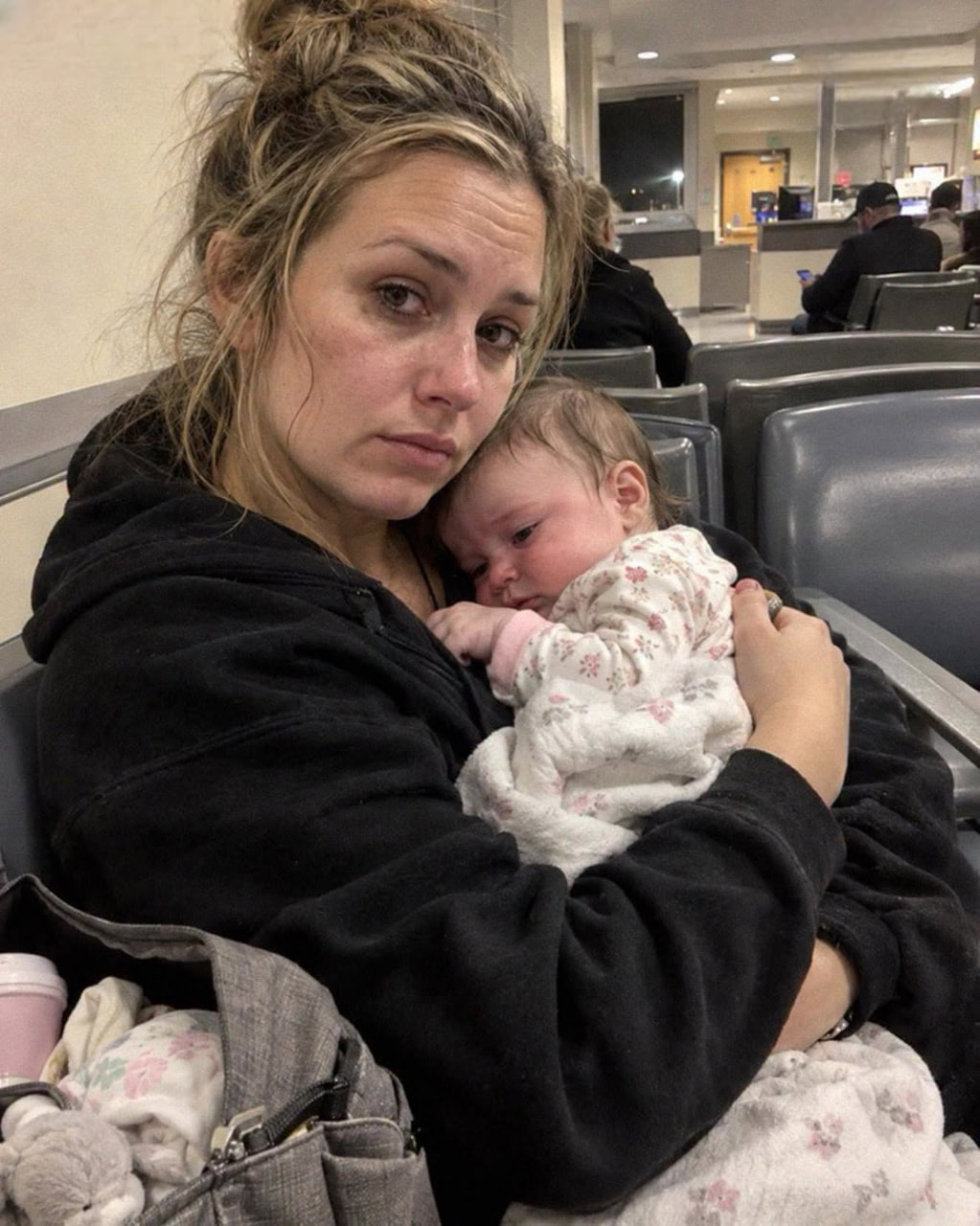
Our four-month-old daughter, Emma, was burning with fever against my chest.
Her breathing had become fast and shallow during the drive to the hospital, and every few seconds she made a faint whimper that frightened me more than screaming would have.
I had barely slept in thirty hours.
My hair was twisted into a knot that was falling apart. There was dried formula on the sleeve of my sweatshirt. My eyes felt like someone had rubbed sand into them.
Beside me, my husband, Daniel, looked exhausted too.
But unlike me, Daniel suddenly had a rescuer.
His mother.
Patricia thrust the coat toward him.
“Come on,” she said. “You’re shaking. You haven’t eaten. You need to go home.”
Daniel stared at her.
“Mom—”
“No.”
She put a hand on his arm.
“You’ve done enough.”
Something inside me became completely still.
Done enough.
Daniel had been in the ER for forty-three minutes.
I had been awake with Emma since two the previous morning.
I had called the pediatrician three times.
I had held our daughter upright against my chest because lying flat made her cough harder.
I had driven to urgent care.
Urgent care had sent us straight to the emergency department after Emma’s oxygen level dipped.
And Daniel had met us there after work.
Forty-three minutes.
Patricia looked at me as if I were an employee failing to perform my assigned duties.
“You’re her mother,” she repeated. “This is what mothers do. Daniel has a job. He can’t destroy himself every time the baby gets a cold.”
I looked at my daughter.
Then at my husband.
Daniel’s mouth opened.
Closed.
And in that moment, I realized something far more painful than anything Patricia had said.
He was waiting for me to make this easier for him.
Again.
He wanted me to say, “It’s okay. Go.”
That was what I always did.
When Emma was two weeks old and Daniel said he needed uninterrupted sleep because he had work, I moved into the nursery with the baby.
When Emma developed reflux and screamed for hours at night, I told Daniel to sleep downstairs.
When he came home and said he was overwhelmed, I stopped telling him how overwhelmed I was.
When Patricia started saying things like, “Men aren’t wired for newborns,” I rolled my eyes privately instead of challenging her.
I kept protecting Daniel from the hard parts of becoming a father.
And then I resented him for believing the hard parts belonged to me.
Patricia pushed the coat into his chest.
“Let’s go.”
Daniel looked at me.
“Rachel…”
I stood.
Patricia’s expression changed immediately.
She probably expected screaming.
Or crying.
Maybe she expected me to remind Daniel that Emma was his child too.
Instead, I adjusted my daughter against my shoulder and said:
“You’re right.”
Patricia blinked.
“So take him.”
Daniel stared at me.
“What?”
I looked directly at my husband.
“Your mother says you didn’t sign up for this. If that’s true, go.”
“Rachel—”
“No. Really.”
My voice was calm.
So calm that it frightened even me.
“Go home with her.”
Patricia’s mouth tightened into a satisfied little smile.
For about three seconds.
Then I continued.
“But understand exactly what you’re choosing.”
Her smile vanished.
I looked only at Daniel.
“If you walk out of this hospital because caring for your sick daughter is too stressful, you are not coming home tonight and pretending nothing happened.”
His face went pale.
“Rachel, I wasn’t—”
“I’m not threatening you.”
I shifted Emma higher.
“I’m telling you what I need from my husband. I need a partner. Emma needs a father. If what you need is someone to rescue you from those responsibilities, then go with your mother.”
Patricia stepped forward.
“You are emotionally blackmailing him.”
I finally turned toward her.
“No.”
I nodded at the coat.
“You came here to take a thirty-three-year-old man away from his sick baby because he looked tired.”
Her lips parted.
“I am protecting my son.”
“And I’m protecting my daughter.”
Before she could answer, a nurse appeared at the doorway.
“Emma Reynolds?”
I turned immediately.
“That’s us.”
Daniel followed automatically.
Patricia grabbed his sleeve.
“Daniel.”
He stopped.
There it was.
The decision.
Not mine.
His.
I had spent years making decisions around him so he would never have to disappoint anyone.
Not tonight.
Daniel looked down at his mother’s hand.
Then at Emma.
He took his coat from Patricia.
She visibly relaxed.
Then Daniel folded it over the back of the chair.
“I’m staying.”
Patricia stared at him.
“What?”
“I’m staying with my daughter.”
“You need rest.”
“So does Rachel.”
“She’s on maternity leave!”
Daniel flinched.
I did too.
That sentence had been used against me for months.
As if maternity leave were a vacation I had somehow cheated my way into.
The nurse stood awkwardly near the door.
Daniel looked at his mother.
“Go home.”
Patricia laughed once.
A sharp, disbelieving sound.
“You’re choosing this drama over your own mother?”
Daniel’s shoulders dropped.
And for the first time I heard him answer the question correctly.
“This isn’t about choosing between you and Rachel.”
He looked at Emma.
“It’s about being her father.”
Patricia’s face changed.
Not sadness.
Not yet.
Something closer to betrayal.
She grabbed her handbag.
“Fine.”
She looked at me.
“I hope you’re pleased with yourself.”
I didn’t answer.
Because I wasn’t.
My baby was sick.
My marriage suddenly felt as fragile as paper.
There was nothing satisfying about it.
We followed the nurse.
Emma’s oxygen saturation was lower than the pediatrician wanted.
They gave her oxygen through a tiny nasal cannula.
She screamed when the nurse suctioned her nose, and Daniel’s eyes filled with tears.
He held her hand.
I stood on the opposite side of the hospital bed.
Neither of us spoke.
After another examination, the doctor told us Emma likely had RSV bronchiolitis.
Because she was so young and her oxygen numbers kept dipping while she slept, they wanted to admit her overnight for observation.
Daniel sat down hard.
“Is she going to be okay?”
“We expect so,” the doctor said. “But babies this young can tire quickly, which is why we’re watching her closely.”
Daniel nodded.
Then he looked at me.
“I’m sorry.”
I shook my head.
“Not now.”
“But—”
“Not now, Daniel.”
I wasn’t punishing him.
I simply did not have enough emotional space to take care of Emma and reassure him about our marriage at the same time.
He understood.
At around eleven, Emma finally fell asleep.
Daniel went downstairs to find coffee.
My phone buzzed.
Patricia.
I almost ignored it.
Then another message appeared.
“You embarrassed me in front of strangers.”
A second one.
“I was only trying to help my son.”
Then:
“You have changed him.”
I stared at that last sentence.
For six years, whenever Daniel disagreed with his mother, Patricia found a way to make it evidence of my influence.
If he skipped one of her Sunday dinners:
Rachel doesn’t want you around your family.
If we spent Christmas morning alone:
Rachel is separating you from us.
If he disagreed with her advice:
You never talked to me like this before you met her.
At first I defended myself.
Then I stopped.
There is no winning an argument with someone who has decided that another adult’s boundaries must have been installed by an outsider.
I placed the phone facedown.
It buzzed again.
This time the message made me sit upright.
“I warned Daniel this would happen. He was never ready for a baby, and you pressured him.”
I read it twice.
Then Daniel returned.
He handed me a coffee.
“What?”
I turned the phone toward him.
He read his mother’s message.
His expression changed.
“Rachel…”
“Did she warn you?”
He sat beside the bed.
“It wasn’t like that.”
My stomach tightened.
“What was it like?”
He rubbed both hands over his face.
“Mom didn’t think we should have a baby yet.”
“I know that.”
“No.”
He lowered his voice.
“She really didn’t think we should.”
I waited.
Daniel looked at Emma.
“When you got pregnant, she kept telling me I wasn’t ready.”
I felt something cold spread through me.
“You never told me.”
“She said I’d lose myself. That everything would become about the baby. That you’d stop caring about us as a couple.”
“Daniel.”
“I didn’t believe her.”
“Didn’t you?”
He looked at me.
There was enough shame in his face that I got my answer.
“I tried not to.”
That hurt more.
Not because Patricia had said those things.
I expected that now.
Because some part of my husband had carried them into our home.
He continued quietly.
“Every time I called her after Emma was born, she said the same thing.”
“What?”
“That I looked exhausted. That I was doing too much. That you were home all day, so nights should be your responsibility.”
I stared at him.
“How often did you call her?”
He hesitated.
“Most days.”
And suddenly I understood our last four months.
Not everything.
But enough.
Every time Daniel started to share the load, Patricia whispered that he was being exploited.
Every time I asked for more help, he was already hearing her voice telling him I should be able to manage.
“She told me you complained about me,” I said.
His head snapped up.
“What?”
“A month after Emma was born. She told me you’d said I was constantly criticizing you and making you feel useless.”
“I never said that.”
I laughed.
Not because it was funny.
“She told me you were afraid to come home because nothing you did was good enough.”
“That’s not true.”
“I spent weeks apologizing for asking you to do anything.”
Daniel stared at me.
Then slowly:
“She told me you didn’t want me waking up with Emma because I did everything wrong.”
Now it was my turn to stare.
“I never said that.”
“I know that now.”
“No, Daniel. You should have known it then.”
He looked devastated.
“We both let her talk for the other person.”
That was true.
And I hated it.
Because it was easier to make Patricia the villain than admit two adults had allowed her to become a translator inside their marriage.
Emma made a small sound.
Both of us turned toward her at the same time.
Daniel stood.
Adjusted her blanket.
Checked the oxygen tube.
I watched him.
The instinct was there.
Maybe it always had been.
But every time fatherhood became uncomfortable, someone had appeared to tell him discomfort meant he was doing too much.
Around two in the morning, Daniel said:
“I need to tell you something else.”
I closed my eyes.
“Please tell me there isn’t more.”
“There is.”
Of course there was.
He pulled out his phone.
Opened his messages with Patricia.
Scrolled.
Then handed it to me.
A conversation from three days earlier.
Daniel:
“Emma’s been coughing all night. Rachel thinks we should take her back to the pediatrician if it’s worse tomorrow.”
Patricia:
“You cannot keep missing sleep and work over every little thing.”
Daniel:
“She’s only four months.”
Patricia:
“And she has a mother.”
Then another:
“You need to establish expectations now or Rachel will make you responsible for half of everything forever.”
I read that sentence three times.
Half.
As if half of caring for his own child were exploitation.
Then I saw Daniel’s answer.
“I know.”
That one hurt.
I handed the phone back.
“You agreed with her.”
Daniel’s eyes reddened.
“Yes.”
“Why?”
“Because I was tired.”
“So was I.”
“I know.”
“No. Stop saying that.”
My voice cracked.
“You know now because we’re sitting in a hospital.”
He said nothing.
“I was tired when I had stitches and was bleeding and feeding a baby every two hours.”
His face crumpled.
“I was tired when you went back to work and everyone congratulated you for changing one diaper before leaving in the morning.”
“Rachel…”
“I was tired when your mother came over and criticized the laundry while holding the baby for seven minutes.”
A tear rolled down my cheek.
“I was tired too, Daniel. But nobody ever said I hadn’t signed up for it.”
He cried then.
Quietly.
Not dramatically.
And I didn’t comfort him.
That mattered.
Not because I wanted him to suffer.
But because for the first time, I let him carry the discomfort of what he had done without rushing to remove it.
“I failed you,” he said.
I looked at Emma.
“You left me alone while standing right beside me.”
He nodded.
“Yes.”
That was the first honest conversation we had had since our daughter was born.
And it might never have happened if Patricia hadn’t walked into the ER with Daniel’s coat.
The Next Morning, My Mother-in-Law Came Back Expecting an Apology—Instead, My Husband Showed Her the Message That Exposed What She Had Been Doing to Both of Us
Emma’s oxygen improved before sunrise.
By eight, the doctor was optimistic.
If she continued breathing comfortably and feeding well, we might go home that afternoon.
At 9:17, Patricia arrived.
This time she carried coffee.
Three cups.
As if caffeine could erase the night before.
Daniel and I exchanged a look.
I had slept maybe forty minutes.
He looked worse.
Patricia walked into the room smiling too brightly.
“How’s my girl?”
She headed directly toward the crib.
I stepped between them.
Not aggressively.
Just enough.
Patricia stopped.
“Nora—”
“My name is Rachel.”
She blinked.
She had called me Nora twice since Emma was born.
Nora was Daniel’s high-school girlfriend.
She knew exactly what she was doing.
“Rachel,” she corrected tightly. “How is the baby?”
“Better.”
“Thank God.”
She handed Daniel coffee.
“Here. You look terrible.”
Then she looked at me.
Nothing.
No coffee.
I almost laughed.
Daniel noticed.
He placed his untouched cup on the counter.
“Mom, sit down.”
Patricia sighed.
“Please don’t start again.”
“Sit.”
Maybe it was his tone.
She sat.
Daniel pulled the visitor’s chair around so he faced her.
“I read back through our messages.”
Patricia glanced at me.
Of course.
Immediately.
As though I had forced him.
Daniel saw it.
“Rachel didn’t tell me to.”
“I didn’t say she did.”
“You looked at her.”
Patricia’s lips tightened.
Daniel continued.
“You told Rachel that I thought she was controlling.”
Patricia froze.
“You told me Rachel didn’t trust me with Emma.”
“I may have said—”
“Did I ever tell you that?”
Silence.
“Mom.”
“I was interpreting.”
“No.”
His voice remained quiet.
“You were creating fights.”
Patricia stood.
“I am not going to sit here and be interrogated after everything I’ve done for this family.”
Daniel stood too.
“Then answer one question.”
“I don’t owe—”
“Why did you tell us different things?”
She looked at me.
Then him.
Finally:
“Because neither of you were being realistic.”
I felt my stomach knot.
Daniel stared.
“What does that mean?”
“You were miserable.”
“I was tired.”
“Exactly.”
“All new parents are tired.”
Patricia shook her head.
“You were disappearing.”
Daniel laughed once.
“Mum, I had a newborn.”
“You were my son before you were a father.”
The room went silent.
There it was.
Not jealousy exactly.
Something deeper.
Patricia seemed genuinely unable to accept that motherhood had not given her permanent priority over every future relationship in Daniel’s life.
Daniel understood too.
I saw it on his face.
“You thought Rachel and Emma were taking me from you.”
“That is ridiculous.”
“Is it?”
“I encouraged you to marry her!”
“Because you thought marriage would add someone to the family.”
He paused.
“You never accepted that it meant I was building my own.”
Patricia’s face reddened.
“You are twisting everything.”
“No.”
Daniel held up his phone.
“You told me Rachel wanted me uninvolved.”
He turned to me.
“You told Rachel I complained she was controlling.”
Back to Patricia.
“You told me taking care of my daughter was too much.”
Patricia folded her arms.
“Because it is.”
Daniel stared at her.
“What?”
“A man should support his family. A woman should manage the home and children. There is nothing wrong with saying that.”
I almost admired the clarity.
At least the mask was gone.
Daniel looked at his mother as if seeing a person he had known his entire life from a completely different angle.
“What happened when Dad was sick?”
Patricia stiffened.
His father, Robert, had died three years earlier after an eighteen-month battle with colon cancer.
Patricia had cared for him almost entirely by herself.
Daniel had often called her heroic.
She had been.
She had bathed Robert.
Managed medications.
Driven him to appointments.
Slept beside him in hospital rooms.
Toward the end, she barely left the house.
Daniel continued.
“You used to tell me nobody helped you enough.”
Her expression shifted.
“That was different.”
“How?”
“Your father was dying.”
“And you were exhausted.”
She looked away.
“You said Grandma told you caring for your husband was your responsibility.”
Patricia said nothing.
“You hated her for saying that.”
Rachel—that is, I—felt something settle into place.
Daniel saw it too.
“Mom.”
His voice softened.
“You’re doing to Rachel what Grandma did to you.”
Patricia’s eyes filled instantly.
“That is not fair.”
“Isn’t it?”
“No!”
For the first time, her anger sounded frightened.
“I survived it.”
Daniel’s answer came quietly.
“That doesn’t mean she should have to.”
Patricia sat back down.
Something in her seemed smaller.
Not defeated.
Exposed.
She looked at Emma.
Then at me.
“I never had anyone telling Robert to get up at night.”
I didn’t answer.
“He worked,” she continued. “I stayed home.”
“So do I right now,” I said.
She looked at me.
“My mother told me exactly what I told Daniel.”
The admission was barely audible.
“Men have enough pressure.”
Daniel sat beside her.
“And did you believe her?”
Patricia’s mouth trembled.
“At first.”
“And later?”
She looked down.
“I resented your father.”
There it was.
Not an excuse.
But an origin.
I understood something then that changed how I saw Patricia without excusing her.
She had survived an unequal marriage by turning inequality into morality.
If she admitted I deserved more support than she had received, she might also have to admit that what happened to her had been unfair.
Sometimes people defend painful systems because questioning them would force them to grieve their own lives.
Patricia wiped her eyes.
“I thought I was protecting you.”
Daniel said:
“You were teaching me to abandon my wife.”
She flinched.
“That’s not what I wanted.”
“It’s what you were doing.”
Nobody spoke for a long time.
Then Patricia looked at me.
“I’m sorry.”
I believed that she meant something.
I wasn’t yet sure she understood what.
So I asked:
“For what?”
She seemed surprised.
Daniel looked at her too.
Patricia swallowed.
“For last night.”
I waited.
“And… for telling Daniel that the baby was primarily your responsibility.”
Another pause.
“For telling both of you things the other hadn’t said.”
Good.
Then:
“And for calling you Nora.”
Daniel closed his eyes.
I stared at her.
“You did that deliberately?”
Patricia looked almost embarrassed.
“Yes.”
I actually laughed.
After everything, that stupid little cruelty suddenly seemed absurd.
“Why?”
“I didn’t like her.”
“Nora?”
“She was rude.”
Daniel made a strangled sound between a laugh and a groan.
“Mom.”
“I’m apologizing!”
For the first time in twenty-four hours, something in the room loosened.
But apology was not restoration.
I needed Patricia to understand that.
“I accept that you’re apologizing,” I said. “But things are changing.”
Her face tightened again.
“What things?”
“You don’t get to come to our house unannounced.”
She opened her mouth.
Daniel interrupted.
“She’s right.”
“You gave me a key.”
“I’m taking it back.”
Patricia stared.
“You cannot be serious.”
“I am.”
“Because of one argument?”
“No.”
Daniel looked at me.
“Because I let you become part of decisions that should have stayed between my wife and me.”
Patricia looked genuinely wounded.
“I’m Emma’s grandmother.”
“And we want you in her life.”
I added:
“But being her grandmother does not make you the third parent.”
She looked down.
I continued.
“And if Daniel complains about me to you, tell him to talk to me.”
Daniel nodded.
“And if Rachel complains about me?”
“I won’t,” I said.
Patricia almost smiled.
I shook my head.
“Not because you’re unsafe. Because I finally understand that discussing my marriage with someone who wants to referee it is a terrible idea.”
Fair.
She took a long breath.
“What happens now?”
Daniel looked at me.
That mattered too.
Not asking his mother.
Not deciding for me.
Looking at me.
“We go home when Emma is discharged,” I said.
“And then?”
“Daniel takes family leave.”
His eyebrows lifted.
I hadn’t told him yet.
“I do?”
“If you want this marriage to work.”
I held his gaze.
“I need sleep. I need help. I need appointments for myself without calculating whether your mother thinks they’re necessary.”
Daniel nodded.
“Yes.”
Patricia started:
“But his company—”
Daniel turned to her.
“No.”
She stopped.
“My company has parental leave. I didn’t take all of it because I thought staying home would make me look less committed.”
He looked ashamed.
“That was my decision.”
Then he turned to me.
“I should have taken it.”
I nodded.
“Yes.”
He would eventually take six additional weeks.
And those six weeks changed more than the previous four months.
Not because he “helped.”
I stopped using that word.
You help someone with their job.
Parenting Emma was his job too.
Daniel learned her feeding schedule.
He took pediatric appointments.
He learned which cry meant hungry and which meant tired.
He discovered that laundry does not magically reappear folded.
He learned that a baby can scream for forty minutes while you do everything right.
He learned the strange loneliness of being home at 2:00 p.m. with a person who cannot talk.
He learned why I sometimes stood in the kitchen staring at nothing after he came home.
And I learned something too.
I had become a gatekeeper without realizing it.
Because Daniel had been inconsistent, I corrected him constantly.
That bottle is too warm.
Not that pacifier.
She hates that onesie.
You have to rock her this way.
Some of it was necessary.
Some of it was me believing competence belonged only to the person who had suffered enough to earn it.
So I stopped correcting everything.
One afternoon Emma screamed while Daniel tried to put her down for a nap.
I heard him walking around upstairs for twenty minutes.
Every instinct told me to rescue both of them.
I stayed downstairs.
Eventually it became quiet.
Daniel came down forty minutes later.
“She likes it when I hum that terrible commercial jingle.”
I laughed.
“She does not.”
“She does.”
He had discovered something about his daughter that I hadn’t.
That mattered.
We began marriage counseling.
Not because Patricia told us to.
In fact, she initially hated the idea.
“Why do strangers need to know your business?”
Daniel answered:
“Because keeping everything inside the family worked terribly.”
I nearly applauded.
Patricia kept her distance.
At first resentfully.
Then cautiously.
Three weeks after Emma’s hospitalization, she texted before visiting.
“Would Saturday at 2 work?”
I showed Daniel.
He smiled.
“Look at that.”
“Growth.”
“She’ll probably arrive at 1:15.”
She arrived at 1:47.
Close enough.
She brought soup.
And did something I had never seen her do.
She handed it to me and asked:
“What do you need?”
I almost said “nothing.”
That old reflex.
Then I stopped.
“Could you hold Emma while I shower?”
Patricia smiled.
“I’d love to.”
She did not tell me I should have showered earlier.
She did not reorganize the kitchen.
She did not tell Daniel to rest while I cleaned.
When I came downstairs twenty-five minutes later, she was sitting on the couch with Emma asleep against her.
Daniel was loading the dishwasher.
Patricia looked at him.
Then at me.
I saw the old instinct cross her face.
The urge to say:
“Let him sit down.”
She didn’t.
That silence was one of the most meaningful apologies she ever gave me.
Months passed.
The night in the ER became family history.
Not a funny story.
A dividing line.
Before and after.
Before, Daniel thought being a good husband meant keeping both his wife and mother from being upset.
After, he understood that sometimes being an adult means letting someone be upset because the alternative is betraying your responsibility.
Before, Patricia believed motherhood meant endless sacrifice and that women who asked fathers for equality were demanding too much.
After, she slowly began admitting that maybe she had deserved more too.
One afternoon when Emma was ten months old, Patricia and I sat together while Daniel and Richard’s brother assembled a swing set outside.
Patricia watched them through the window.
“He never changed a diaper,” she said suddenly.
“Daniel?”
“No. Robert.”
I looked at her.
“Not one?”
“Not one.”
She smiled sadly.
“I used to brag about it.”
“Why?”
“Because if I could do everything myself, I thought that meant I was a better mother.”
She stared into her coffee.
“Really, it just meant I was tired all the time.”
I said nothing.
“I missed things.”
“What things?”
“Enjoying you children.”
She corrected herself quickly.
“Enjoying my children.”
I smiled.
“I knew what you meant.”
She looked outside.
“I was always cooking, cleaning, preparing, remembering. Robert got to sit on the floor and play.”
There was no anger in her voice anymore.
Only grief.
“I thought that was normal.”
“It was normal for a lot of families.”
“That doesn’t mean it was good.”
“No.”
She nodded.
A minute later she said:
“I think that’s why I got so angry with you.”
“Because I asked Daniel to change diapers?”
She laughed.
“No.”
Then she became serious.
“Because you expected something I never allowed myself to expect.”
That was the first time I truly forgave her.
Not because her pain justified what she had done.
It didn’t.
But because she had finally stopped using her pain as a rule for my life.
A year after that ER night, Emma turned sixteen months old.
We took her for a routine checkup.
Nothing dramatic.
Just vaccines, measurements and a toddler who screamed as if the doctor had personally betrayed her.
Afterward Daniel carried her through the hospital lobby.
We passed the emergency department.
I stopped.
The same gray chairs were there.
Maybe not literally the same ones.
They looked identical.
Daniel noticed.
“You okay?”
“Yeah.”
Emma reached for me.
I took her.
She smelled like baby shampoo and crackers.
Daniel looked toward the ER entrance.
“I think about that night a lot.”
“Me too.”
“I almost went with her.”
I looked at him.
“I know.”
He swallowed.
“I wanted to.”
That honesty would once have hurt me.
Now I appreciated it.
“I know that too.”
He shook his head.
“I was exhausted, and when Mom walked in and said I could leave, for maybe five seconds it felt like somebody had opened a door.”
I adjusted Emma on my hip.
“What stopped you?”
Daniel looked at me.
“You didn’t.”
I frowned.
He smiled faintly.
“That’s what stopped me.”
“What do you mean?”
“You had always made the choice easy for me. You’d say, ‘Go sleep.’ ‘Go to work.’ ‘I’ve got it.’”
His eyes became wet.
“That night you finally said, ‘Choose.’”
I remembered Patricia holding out his coat.
My daughter struggling to breathe.
The cold feeling inside me.
“I wasn’t trying to teach you a lesson.”
“I know.”
“I was done.”
“I know.”
He took my hand.
“And I needed you to be.”
Emma immediately slapped our joined hands because apparently affection between her parents was unacceptable.
We laughed.
Then a voice behind us said:
“Are you going to stand in the middle of the hallway all day?”
Patricia.
She was walking toward us carrying a little stuffed rabbit.
Emma squealed:
“Nana!”
Patricia’s entire face transformed.
She held out her arms.
Then stopped.
She looked at me.
“May I?”
It was such a small thing.
But I noticed.
I always noticed now.
I handed Emma to her.
“Of course.”
Patricia kissed her granddaughter.
Then looked at Daniel.
“You look tired.”
Daniel raised an eyebrow.
Patricia froze.
Then corrected herself.
“You both look tired.”
I started laughing.
She rolled her eyes.
“I’m learning.”
“Yes, you are.”
We walked toward the parking lot together.
That evening, after Emma fell asleep, I found the black sweatshirt I had worn in the ER at the bottom of a drawer.
There was still a faint stain near the cuff.
Formula, probably.
I held it for a moment.
I remembered myself in those gray chairs.
Exhausted.
Terrified.
Humiliated.
Watching another woman tell my husband that fatherhood was optional because motherhood was not.
For a long time afterward I thought the important moment had been telling Patricia:
“Take him.”
But it wasn’t.
The important part was what came after.
I stopped protecting Daniel from every consequence of being an adult.
He stopped confusing his mother’s approval with peace.
Patricia stopped treating suffering she had endured as an inheritance every woman after her should accept.
And slowly, painfully, we built something better.
Not because karma punished Patricia.
Nothing dramatic happened to her.
She did not lose money.
Nobody humiliated her publicly.
She wasn’t cut out of Emma’s life.
Her consequence was harder.
She had to watch her son become a man who could love her without obeying her.
She had to admit that the marriage model she defended had hurt her.
And she had to learn that being needed was not the same as being entitled to control.
As for Daniel, he learned something that night too.
He really hadn’t signed up for “that much stress.”
None of us had.
No parent signs a document promising fevers, midnight emergency rooms, sleeplessness, fear, vomit, hospital admissions or the terrifying responsibility of loving someone more than you can protect them.
We sign up for a child.
The rest comes with them.
And parenthood isn’t proven when everything is easy.
It is proven in the moment someone holds out your coat and offers you a way to leave.
Daniel almost took it.
Then he stayed.
And from that night forward, I made sure staying was something he chose for himself.